
Desculpe, nada no carrinho.
TELE VENDAS: (51) 9 99950436
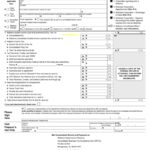
Publication 946 2023, How To Depreciate Property Internal Revenue Service
- Por Sempre Flor
- |
- Bookkeeping
- |
- 0 Comment

Depreciation measures the decline in the value of a fixed asset over its usable life, allowing businesses to spread out the cost of that asset over several years. To claim depreciation, you must own the asset and use it for income-producing activity. Understanding depreciation helps you predict the value of your asset and claim the relevant tax deductions to reduce your total taxable income. Measuring depreciation is important as it allocates the cost of an asset over the periods that the company benefited from its use (matching revenues and expenses). We’ll explore different ways to calculate steady and accelerated depreciation so you can measure depreciation on different types of assets.
Double declining balance depreciation
Many systems allow an additional deduction for a portion of the cost of depreciable assets acquired in the current tax year. The UK system provides a first-year capital allowance of £50,000. A deduction for the full cost of depreciable tangible personal property is allowed up to $500,000 through 2013. For example, due to rapid technological advancements, a straight line depreciation method may not be suitable for an asset such as a computer. A computer would face larger depreciation expenses in its early useful life and smaller depreciation expenses in the later periods of its useful life, due to the quick obsolescence of older technology. It would be inaccurate to assume a computer would incur the same depreciation expense over its entire useful life.
Want More Helpful Articles About Running a Business?
After three years, the company changes the expected useful life to a total of 15 years but keeps the salvage value the same. With a book value of $73,000 at this point (one does not go back and “correct” the depreciation applied so far when changing assumptions), https://www.adprun.net/ there is $63,000 left to depreciate. This will be done over the next 12 years (15-year lifetime minus three years already). Tracking depreciation will lower the net income for your business, which in turn means that you will pay less in taxes.

Methods of Depreciation
You can depreciate this property using either the straight line method or the income forecast method. You can amortize certain intangibles created on or after December 31, 2003, over a 15-year period using the straight line method and no salvage bookkeeping terms value, even though they have a useful life that cannot be estimated with reasonable accuracy. For example, amounts paid to acquire memberships or privileges of indefinite duration, such as a trade association membership, are eligible costs.
Methods for depreciation
You can find the detailed table in Publication 946, How to Depreciate Property, with the updated 2019 version expected soon. Depreciation rules are established by the IRS and https://www.online-accounting.net/the-difference-between-expenses-and-assets/ directly affect your business taxes at year’s end. It’s important to remember that depreciation is only calculated on fixed assets, as intangible assets are always amortized.
- If the vehicle were to be sold and the sales price exceeded the depreciated value (net book value) then the excess would be considered a gain and subject to depreciation recapture.
- He bought the ice cream truck, and that truck helps him to earn money.
- The following table shows the declining balance rate for each property class and the first year for which the straight line method gives an equal or greater deduction.
- Parts that together form an entire structure, such as a building.
You must generally file Form 3115, Application for Change in Accounting Method, to request a change in your method of accounting for depreciation. You repair a small section on one corner of the roof of a rental house. However, if you completely replace the roof, the new roof is an improvement because it is a restoration of the building. If you improve depreciable property, you must treat the improvement as separate depreciable property.
James Company Inc. owns several automobiles that its employees use for business purposes. The employees are also allowed to take the automobiles home at night. The FMV of each employee’s use of an automobile for any personal purpose, such as commuting to and from work, is reported as income to the employee and James Company withholds tax on it. This use of company automobiles by employees, even for personal purposes, is a qualified business use for the company. John, in Example 1, allows unrelated employees to use company automobiles for personal purposes.
The formula determines the expense for the accounting period multiplied by the number of units produced. Remember that while you can use sum-of-the-years and units of production depreciation for your own books, you will have to use either straight-line or double declining depreciation methods when calculating depreciation for tax purposes. While small businesses can write off expenses as and when they occur, it’s not possible to expense larger items – also known as fixed assets – such as vehicles or buildings. That’s where depreciation, an accounting method you can use to spread the value of an asset over multiple years, comes in. Find out everything you need to know about the different types of depreciation, right here. In accounting terms, depreciation is considered a non-cash charge because it doesn’t represent an actual cash outflow.
If you reduce the basis of your property because of a casualty, you cannot continue to use the percentage tables. For the year of the adjustment and the remaining recovery period, you must figure the depreciation yourself using the property’s adjusted basis at the end of the year. Under MACRS, averaging conventions establish when the recovery period begins and ends. The convention you use determines the number of months for which you can claim depreciation in the year you place property in service and in the year you dispose of the property. You may have to recapture the section 179 deduction if, in any year during the property’s recovery period, the percentage of business use drops to 50% or less. In the year the business use drops to 50% or less, you include the recapture amount as ordinary income in Part IV of Form 4797.
The partnership’s taxable income from the active conduct of all its trades or businesses for the year was $1,110,000, so it can deduct the full $1,110,000. It allocates $40,000 of its section 179 deduction and $50,000 of its taxable income to Dean, one of its partners. If you are married, how you figure your section 179 deduction depends on whether you file jointly or separately.
Other property used for transportation includes trucks, buses, boats, airplanes, motorcycles, and any other vehicles used to transport persons or goods. For more information and special rules, see the Instructions for Form 4562. The SL method provides an equal deduction, so you switch to the SL method and deduct the $115. Appendix A contains the MACRS Percentage Table Guide, which is designed to help you locate the correct percentage table to use for depreciating your property. However, a qualified improvement does not include any improvement for which the expenditure is attributable to any of the following. If you placed your property in service in 2023, complete Part III of Form 4562 to report depreciation using MACRS.
Depreciation allows a business to spread out the cost of this machinery on its books over several years. Depreciation using the straight-line method reflects the consumption of the asset over time and is calculated by subtracting the salvage value from the asset’s purchase price. That figure is then divided by the projected useful life of the asset. Not accounting for the depreciation of assets can have a significant impact on the profits of a business. Section 1250 is only relevant if you depreciate the value of a rental property using an accelerated method, and then sell the property at a profit. To help you get a sense of the depreciation rates for each method, and how they compare, let’s use the bouncy castle and create a 10-year depreciation schedule.
For this purpose, however, treat as related persons only the relationships listed in items (1) through (10) of that discussion and substitute “50%” for “10%” each place it appears. Treat the leasing of any aircraft by a 5% owner or related person, or the compensatory use of any aircraft, as a qualified business use if at least 25% of the total use of the aircraft during the year is for a qualified business use. A qualified moving van is any truck or van used by a professional moving company for moving household or business goods if the following requirements are met.
Any asset’s residual value is carrying value or salvage value at the end of the useful life. A business calculates the residual value of assets to estimate what it can receive in exchange for an asset at the end of its useful life. We will discuss the concept of depreciation, its types, and formulas. It will help you understand how to treat your assets and write them off over time. We all know that any business owns assets; some are physical while others are non-physical.
Publicado por

Deixe um comentário